Trump: AI Leaders Sign 'Morally Binding' Self-Policing Constitution
Tech CEOs signed a voluntary "constitution" to self-police AI development, which President Trump called "morally binding."
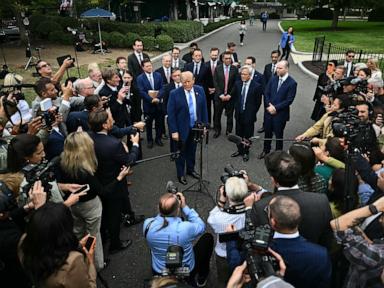
President Donald Trump announced Tuesday that leaders from top artificial intelligence companies have signed a "constitution" to self-police the rapidly advancing technology. The agreement, referred to as The White House Accord on Superintelligence: A Joint Commitment on Frontier SI Responsibilities, was signed during a meeting at the White House attended by executives from major AI firms and administration officials.
The meeting occurred amidst escalating warnings from AI experts about the potential existential risks posed by superintelligent AI, with many calling for measures to slow its development until safety concerns can be adequately addressed. Lawmakers have been considering potential legislative actions in response to these concerns.
House Speaker Mike Johnson described the accord as a voluntary statement of principles and standards for the industry, emphasizing robust internal controls and external review processes. President Trump characterized the agreement as "morally binding," stressing the industry's commitment to self-regulation. He also indicated the potential formation of a committee to oversee the industry's progress, though details about its composition and authority remain unclear.
The implications of this self-regulatory accord are significant, as it represents a direct engagement between the government and the leading AI companies on a critical technological frontier. While the agreement is voluntary, the "morally binding" nature, as described by the President, suggests an expectation of adherence and accountability from the signatories.
Attendees at the meeting included Meta CEO Mark Zuckerberg, Elon Musk, Anthropic CEO Dario Amodei, Google CEO Sundar Pichai, Jensen Huang from Nvidia, Palantir's Alex Karp and Shyam Sankar, Amazon's Jeff Bezos, and Greg Brockman from OpenAI. This gathering highlights the significant influence these companies and their leaders hold in shaping the future of AI.
Details of the accord, as shared via a screenshot by President Trump, appear to outline expectations for AI companies to implement various controls and audits. The document emphasizes each company's individual responsibility in ensuring its technology builds customer trust. However, the extent to which these principles differ from existing commitments by companies like OpenAI and Anthropic, which have already announced plans for third-party evaluators, remains to be seen.
House Speaker Johnson stated that Congress would continue to guide the industry's development in a safe manner, but did not announce any specific legislative actions to enforce the accord's principles. This suggests a preference for industry-led self-governance for the time being, with legislative oversight potentially following if self-regulation proves insufficient.
Questions remain regarding the enforcement mechanisms for the "morally binding" accord and the specifics of the proposed oversight committee. The public release of the full accord is anticipated, which may provide further clarity on the commitments made by the AI leaders and the path forward for AI governance.
This article was written by AI based on publicly available news reporting. Original reporting by the linked source.