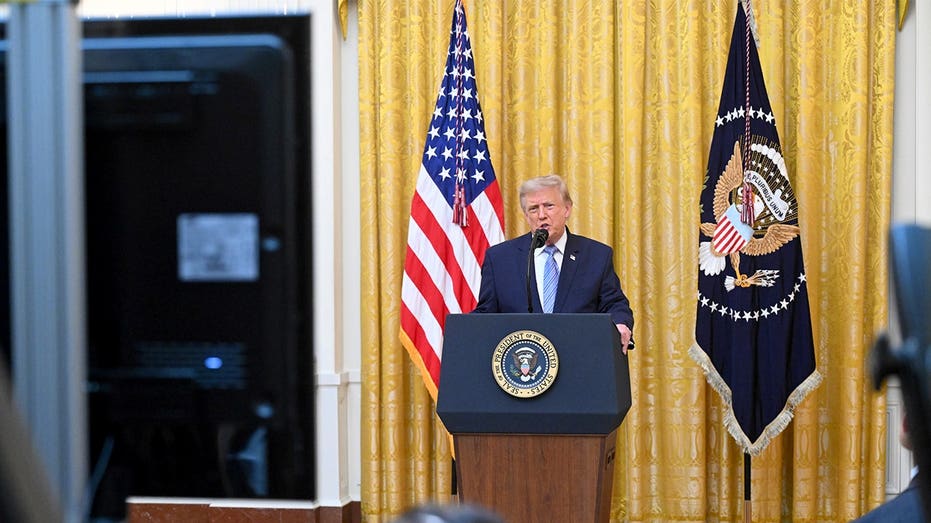
ABC, NBC, CNN Skip Live Broadcast of Trump Election Security Speech
Major news networks ABC, NBC, and CNN opted not to air former President Donald Trump's primetime election security address live, citing concerns over misinformation.
Major U.S. television networks ABC, NBC, and CNN chose not to broadcast former President Donald Trump's primetime address on election security live on Thursday evening. The decision marked a divergence from previous instances where such addresses from the former president were carried by multiple networks.
The networks' move comes amidst ongoing concerns about the spread of misinformation related to election integrity, a topic that has been central to political discourse following recent election cycles. By not airing the speech live, the networks aimed to avoid potentially broadcasting unsubstantiated claims.
Instead of live coverage, ABC and NBC aired edited portions of Trump's remarks during their regular news programming. CNN also opted for a similar approach, providing coverage and analysis of the speech rather than a full live broadcast. The decision reflects a growing trend among some media outlets to exercise greater editorial control over the dissemination of potentially controversial or factually challenged statements from political figures.
This decision by ABC, NBC, and CNN highlights the complex considerations news organizations face in balancing the public's right to information with their responsibility to report accurately and avoid amplifying misinformation. The networks' approach suggests a heightened awareness of the potential impact of live, unedited political speeches on public perception and the electoral process.
While the specific content of Trump's speech was not immediately available for detailed review due to the networks' decision not to air it live, his previous statements on election security have often been met with scrutiny and fact-checking by media outlets. The choice to provide edited coverage or analysis indicates a strategy to contextualize his remarks and address any factual inaccuracies directly.
The absence of a simultaneous live broadcast across these major networks means that a significant portion of the viewing public did not receive the former president's message directly from these platforms. Instead, their understanding of the speech would be filtered through the subsequent reporting and commentary provided by the networks.
This approach contrasts with past election-related events where networks often provided extensive live coverage of major political figures' speeches, regardless of content. The shift suggests a potential evolution in how media outlets are handling political communication, particularly concerning sensitive topics like election security.
It remains to be seen how this decision will influence future media coverage of political addresses and whether other networks will adopt similar strategies when faced with speeches that may contain disputed information. The long-term implications for political discourse and media responsibility are likely to be a subject of continued discussion.
This article was written by AI based on publicly available news reporting. Original reporting by the linked source.