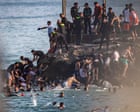
57 Die as 50,000 Migrants Storm Spanish Enclave Ceuta from Morocco
At least 57 people died as 50,000 migrants crossed into Spain's Ceuta enclave from Morocco in 24 hours, sparking a crisis.
At least 57 people have died attempting to reach the Spanish enclave of Ceuta, after an estimated 50,000 migrants surged across the border from Morocco within a single 24-hour period. The massive influx overwhelmed the small territory, which has a population of 85,000, triggering a political crisis for Madrid and drawing varied responses from other European Union nations.
Spanish Prime Minister Pedro Sánchez, who arrived in Ceuta on Friday, condemned the event as a "violation of Spain's territorial integrity." He pledged to deploy all available resources to ensure the safety of the city's residents. The mass crossing is attributed by Sánchez to "human trafficking mafias" exploiting a recent Spanish supreme court ruling that prevents the immediate return of individuals intercepted at sea attempting to enter Ceuta or the other North African enclave, Melilla, under special rules.
Sánchez stated that this ruling "spread like wildfire" through human trafficking networks, leading to the "avalanche" witnessed. He announced plans to establish a temporary reception center to process, register, triage, and expedite the expulsion of those without a legal right to remain in Spain. Additionally, the government intends to install a visible barrier of buoys near the breakwater at Ceuta's Tarajal beach to clearly delineate the border and comply with the court's decision.
The sheer scale of the crossing has raised significant concerns about border management and the humanitarian crisis unfolding. The incident places renewed pressure on EU border policies and raises questions about Spain's ability to manage such large-scale arrivals, particularly in its geographically isolated enclaves.
Reports indicated that hundreds of migrants ran and cheered upon entering Spanish territory. The circumstances surrounding the deaths of the 57 individuals were not immediately detailed, but the high number underscores the perilous journey undertaken by many seeking to reach Europe. The Spanish government's response includes immediate humanitarian aid and processing measures.
Other EU countries have reacted with a mix of criticism and concern. Some have called for Spain to be suspended from the Schengen free-movement zone, highlighting the broader implications for European security and immigration policies. The incident is likely to fuel ongoing debates about border control and burden-sharing among member states.
Ceuta and Melilla, located on Morocco's northern coast, are the only land borders Spain shares with Africa, making them focal points for migration attempts. The two enclaves have historically faced significant pressure from migrants seeking to enter the EU.
Further details regarding the identities of the deceased and the specific operational responses by Spanish authorities are expected as the situation develops. The government's commitment to processing and expelling those without legal claims suggests a swift, albeit challenging, phase of repatriation may follow.
This article was written by AI based on publicly available news reporting. Original reporting by the linked source.