1960s London Home Stays 10C Cooler Without Air Conditioning
An architect's retrofitted 1960s London council house remains 10C cooler than outside on a 35C day using Passivhaus principles.
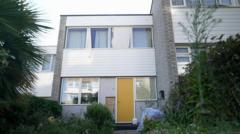
In south London, an architect-designed 1960s ex-council house is successfully mitigating extreme summer heat without relying on air conditioning. On a 35C day, the home, owned by architect Marion Baeli, was found to be 10C cooler inside than the ambient temperature, demonstrating a potential solution for overheating homes in the UK.
With the UK facing increasingly hotter summers and over half of its homes at risk of overheating, Baeli's home serves as a case study for adapting existing housing stock. Current climate change projections suggest that up to 92% of UK homes could be at risk of overheating by 2050 if no adaptations are made.
Baeli, who is also a non-executive director for the Passivhaus Trust, describes her home as akin to a well-insulated flask, designed to maintain a constant internal temperature. The house achieved this by adhering to the Passivhaus standard, an international building certification developed in Germany approximately 35 years ago. This standard focuses on creating highly insulated and airtight buildings that minimize energy consumption for heating and cooling.
When the Baeli family moved into the property a decade ago, it featured draughty windows and poor insulation, leading to difficulties in staying warm in winter and cool in summer. The retrofitting process involved several phases, beginning with the insulation of shared walls, flooring, and the roof, alongside efforts to eliminate thermal bridges – areas where heat can escape or enter rapidly.
Two years into the renovation, the exterior walls were replaced with thinner, super-insulated timber-framed walls, and triple-glazed windows were installed. Crucially, the house was made airtight, necessitating the installation of a ventilation system to ensure continuous fresh air circulation. These measures collectively prevent drastic temperature fluctuations throughout the year.
As a result of these adaptations, Baeli estimates her home's energy demand has decreased by 88%, leading to annual savings of nearly £750 on her utility bills. In winter, a single radiator is sufficient to heat the four-bedroom, three-story house because heat loss is significantly reduced.
The Passivhaus Trust acknowledges that retrofitting homes to this standard can be costly. However, the long-term benefits of reduced energy consumption and improved thermal comfort, especially in the context of rising global temperatures, are significant.
Baeli's home highlights the practical application of building science to address the challenges posed by a changing climate. While the initial investment in retrofitting may be substantial, the success of her 1960s ex-council house suggests that such adaptations could be a viable pathway to creating more resilient and comfortable living spaces for the future.
This article was written by AI based on publicly available news reporting. Original reporting by the linked source.